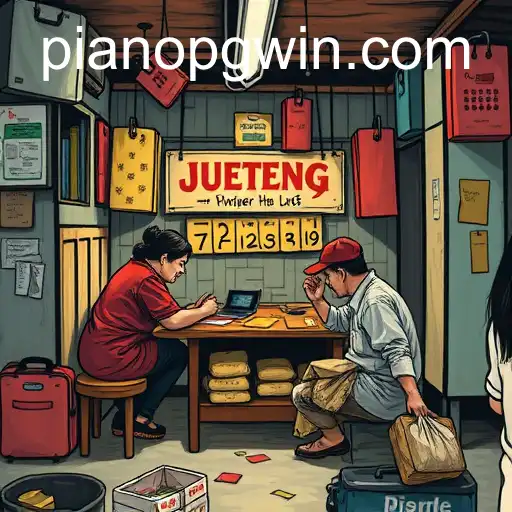
The Underground Economy of Jueteng: A Deep Dive into the Persistent Gambling Phenomenon
In the vibrant tapestry of Philippine culture, the word “Jueteng” represents more than just a numbers game; it embodies a complex web of economic activity, socio-political influence, and cultural persistence. Often publicized in the media yet remaining mostly shrouded in mystery, Jueteng has carved out an indelible role in both rural and urban Philippine societies.
Understanding Jueteng: The Basics
Jueteng is an illegal numbers game that has been running in the Philippines for decades. The game is essentially a lottery that draws two numbers, and while its mechanics are delightfully simple, its implications are far from straightforward. As players pick combinations hoping for a financial windfall, the underlying systems enable power dynamics and economic exchanges that go beyond mere gambling.
The Origins and Evolution of Jueteng
The practice of Jueteng dates back to Spanish colonization. Records suggest it evolved from a Chinese game of chance, and over time, the game became ingrained into local traditions. Its growth was largely spurred by its adaptability and the ease with which it exploits socioeconomic conditions. As rural communities struggled economically, Jueteng emerged as a pathway offering hope and a chance at quick money, even as the odds were stacked against them.
Jueteng's Intersection with Politics and Society
Jueteng is not merely a form of gambling; it has significant socio-political ramifications. Despite its illegal status, the game persists partly due to a network of protection from within the political sphere. Historically, local and national politicians have either tacitly or overtly supported Jueteng operations, seeing it as a reliable source of funds, both for personal gain and for financing political campaigns. This protection perpetuates a cycle, ensuring that Jueteng remains a fixture within society.
The Economic Impact: A Double-Edged Sword
Economically, Jueteng operates as an underground enterprise with a substantial amount of daily betting. It provides employment to thousands, from bet collectors, known colloquially as cobradores, to local gang bosses who organize the operations. While it sustains an informal economy, it simultaneously draws money away from legal markets, affecting governmental revenue streams through untaxed proceeds.
The government has continuously attempted to eradicate Jueteng, viewing it as a depriver of legitimate economic growth and a challenge to law and order. However, these efforts often fail due to the entrenched nature of the business and its appeal to those seeking a financial lifeline in worsening economic conditions.
Public Perception and Cultural Entrenchment
Public opinion on Jueteng is highly polarized. For some, it represents a cultural heritage and a community activity that fosters a sense of excitement. For others, it is synonymous with greed and moral degeneration. The game’s societal role is deeply linked to the economic status of its players; those in poverty view it through the lens of hope and opportunity, while others criticize it for exploiting the vulnerable.
Cultural affinity towards gambling practices in the Philippines provides Jueteng with a veneer of respectability and tradition. This cultural entrenchment makes efforts to eliminate the game even more challenging as it is viewed less as a vice and more as a cultural touchstone.
The Role of Media in Jueteng’s Narrative
Media portrayal of Jueteng plays a crucial role in shaping public understanding and governmental policy responses. Investigative pieces and news reports often highlight its impact on elections and its role in corruption, attracting attention to this clandestine activity. Media exposes have prompted public outrage and governmental inquiries, yet significant reformations or crackdowns remain elusive.
This inconsistent portrayal—sometimes as a victimless crime and at other times as a societal leech—mirrors the multifaceted reality of Jueteng, contributing to an ongoing dialogue that straddles moral, legal, and cultural domains.
Jueteng and Legalization Debates
The persistent nature of Jueteng has led to debates about legalization as a solution. Proponents argue that legalization could redirect Jueteng's revenues from the black market into public coffers through taxation. It could dismantle corruption networks by bringing operations into transparent and regulated environments. However, detractors claim that legalization would only signal governmental defeatism and encourage more extensive gambling practices, exacerbating social vices.
Conclusion: The Uncertain Future of Jueteng
In summary, Jueteng continues to thrive, buoyed by a complex mix of economic necessity, cultural ties, and political theater. As discussions continue over its place in society, one certainty remains: Jueteng exemplifies the intricacies of illicit economies embedded within a country’s cultural and socio-political framework. It challenges prevailing notions of legality and morality, ensuring its status as a permanent point of debate within Philippine society.